


The award-winning podcast from WWNO/WRKF that dives deep into the environmental issues facing coastal communities on the Gulf Coast and beyond. Sea Change will bring you stories that illuminate, inspire, and sometimes enrage, but above all, remind us why we must work together to solve the issues facing our warming world. The podcast will help document our changing coasts with accountability journalism that’s too often missing from today’s media while sharing captivating stories from the people dealing with the most significant and complex problems of our time.
Hosted by Carlyle Calhoun, the show is based out of New Orleans, Louisiana which — perhaps more than any other place — embodies the existential threat of climate change. But like the city known as the Big Easy — Sea Change will also showcase joy, and resiliency — and tell powerful stories of people making a difference.
Also broadcast on 89.9 FM at noon during Louisiana Considered every other Friday.
Sea Change is distributed by PRX and is a part of the NPR Podcast Network.
Made possible with major support provided by the Gulf Research Program of the National Academy of Sciences, Engineering, and Medicine and The Water Collaborative. WWNO’s Coastal Desk is supported by the Walton Family Foundation, the Greater New Orleans Foundation, and the Meraux Foundation.


-
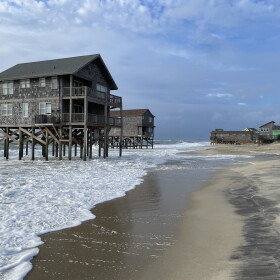 We love our beaches. We build homes beside them, vacation on them, and spend billions of dollars trying to keep them from disappearing. But beaches are supposed to move—and as sea levels rise, keeping them in place is becoming more expensive, more difficult, and possibly impossible.So what happens when the sand, the money, and the time start running out?
 -
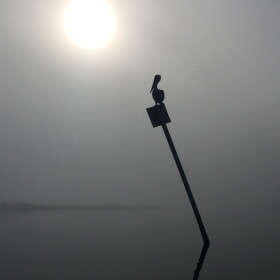 What does it take to bring a seabird back from the brink—and can we keep it there? We travel from a rocky island off Maine to a tiny restored island in coastal Louisiana to learn the astonishing comeback stories of puffins and pelicans. This is a hopeful story about how innovative ideas can save wildlife — and asks whether they're enough in a rapidly changing world.
 -
 Throughout Western history of conservation, protecting nature has often meant removing people. It's what happened during the creation of many of America's national parks. But what if protecting nature didn't have to mean displacing the people who call it home? That's the question that brings us to Culatra, a small fishing island off Portugal's southern coast, and one of the country's seven natural wonders.For decades, the Portuguese government saw only one way to save the fragile lagoon surrounding Culatra: kick out the residents. This episode follows one woman's decades-long fight for her island — and the unlikely alliance she built along the way with the very scientists once sent to evict her.
 -
 Neil McQueen learned to surf as a Texas teenager, and it changed his life – eventually pulling him away from a career as a plastics engineer and into the fight to save the very waters that shaped him.
 -
 In the Netherlands, water has always been both a threat and a triumph. A quarter of the country lies below sea level, and for centuries the Dutch have engineered their way to safety. It’s a place not unlike New Orleans: a delta shaped by risk, resilience, and the belief that with enough ingenuity, water can be controlled. But as sea levels rise, that centuries-old confidence is beginning to crack.


